Showing posts with label Book Review. Show all posts

Saturday, May 23, 2026

Maurice and Maurice: A novel and Movie


Maurice: Novel (1914) by E. M. Forster

I came to E. M. Forster’s Maurice via its movie adaptation similarly titled. Forster completed it in 1914 but was published a year after his death in 1970. As a gay themed novel, it would have been daring in 1914, just fifteen years after Oscar Wilde’s trial. Forster was a homosexual, a fact he did not hide from his friends but also did not acknowledge it publicly. By 1971, queer fiction as a genre was beginning to take-off with several published novels by acclaimed writers such as James Baldwin, Christopher Isherwood and Gore Vidal. Maurice got a somewhat tepid response from critics. In fact, it was seen as inferior to A Room with a View and Howards End. 

Maurice is a coming-of-age story and a love triangle—it tracks the sexual journey of our eponymous hero from adolescence to adulthood, from a confused awareness of same sex attraction to the first taste of gay love (albeit platonic), heartbreak, attempts at conversion therapy and finally self-acceptance and physical consummation with a male lover. Running parallel to Maurice's quest for sexual identity is his Cambridge fellow student and first love Clive Durham's ambiguous sexuality. A squire with a country estate and political ambitions, Clive rejects (perhaps represses) physical desire in masculine love. So much so that after a bout of pneumonia he declares himself cured of his love for Maurice, gets married and encourages Maurice to do the same. At this point, Clive insists he and Maurice continue as friends. There is a third person in this story- Alec Scudder, the gay groundskeeper in Clive's estate. On a visit to Clive's estate, Maurice meets Alec and they start an affair that is initially sexual but turns into love. To Clive's horror, Maurice leaves with Alec never to be seen again in London society. 

Maurice is not a particularly likeable character. He is an upper middle class privileged young man--has no money problems, works in his father's firm, treats his widowed mother and unmarried sisters poorly, and the winds of cataclysmic world war that is slowly blowing towards England hardly touches him. His one crisis in life is sexual and in that struggle for sexual identity, Maurice becomes heroic. He refuses to live half a life offered by Clive that would be safe and respectable but without passion. Instead, he gives up social standing and financial security, risks exposure and public disgrace to be in a relationship that makes him happy. 

Critics may not have liked Maurice when it first came out, but time has worked in its favor. It is now recognized as a classic and is part of gay fiction canon. The novel's strength comes from its quiet but passionate argument that physical desire in gay love is as natural as in heterosexual relationship. 

Maurice: Movie (1987)--A Merchant Ivory Production starring James Wilby, Hugh Grant and Rupert Graves  

I saw Maurice the first time many years after it was released in 1987. It was my first gay movie. Not having read the book, I did not know what to expect and was blown away by both its theme of homosexual love and sex scenes between male characters. One does not have to read the novel to appreciate the movie. It stands very well on its own. The only thing that stayed in my memory was the scene when the butler is walking up the stairs with the breakfast and Maurice and Alec are still in bed together. Next moment he walks in, starts cleaning up the room, spots the ladder by the window and casually points to a mud spot on the floor. I remember holding my breath waiting for other telltale signs that might betray Maurice and heaving a huge sigh of relief when the scene ended.

Viewing it the second time after reading the book, I was able to appreciate the changes made in the movie version while retaining the broad contours of the novel. The biggest change is the storyline involving Lord Risley. He is a minor but interesting character in the book as an openly gay fellow student of Maurice and Clive. In the movie, he gets arrested for sodomy, tried in public and sentenced to imprisonment. This incident is set up as the reason for Clive renouncing his homosexuality and settling into a heterosexual passionless marriage. In showing men kissing and in bed together, the movie is bold for its time. There is also the nostalgic period settings, attractive protagonists and excellent acting. But it does not sugarcoat the oppressive social and sexual mores of the era and the price that is extracted from those who choose to defy them. 

It was a groundbreaking movie in 1987. Almost forty years after it was released, the movie based on a story written more than hundred years ago still holds up. 

My recommendation? Read the book, watch the movie in any order. It will be worth your time. 


Wednesday, April 22, 2026

Top Ten Tuesday: Floods and Rivers

 For Top Ten Tuesday April 21, 2026 theme (April Showers), I chose to go with books (fiction or non-fiction) dealing with rivers and floods (which also happen to have blue covers). I have four here:

1. Naina Kumar: Flirting with Disaster


2. Robert Macfarlane: Is a River Alive


Tuesday, April 21, 2026

Naina Kumar: Flirting with Disaster Review


Having experienced two hurricanes myself, I was initially somewhat skeptical of a romance story about rescuing a failed marriage while trapped in a hurricane. Is it even possible to have sane conversations about marriage and divorce amidst imploding windows, broken tree limbs, fire ants and snakes in a city that has turned into a giant lake? In this well written novel, author Naina Kumar shows that under the wreckage of a natural disaster, it is still  possible to find that lost love. Flirting with Disaster is about two people finding the courage to be vulnerable in love, overcoming fear of failure and parental disapproval and, learning to make  open and honest conversations with each other. The hurricane is the third main character and effectively provides most of the drama in this emotionally satisfying story.

When the story begins Meena is on her way to her hometown Houston to get her long estranged husband Nikhil to sign the divorce papers so that she could marry her boyfriend and kick off her political career. She plans to be back home the same day without realizing that there is a hurricane on the way. But with the city in a mad scramble to escape the hurricane, airlines are booked, highways are jammed and Meena has no choice but to stay with Nikhil. Seven years ago, she met Nikhil while she was preparing for her bar exams. Nikhil who is in construction business, is a college dropout and suffers from a sense of inferiority, both about his profession and his lack of college education. Meena has her own hangups. She is terrified of failing and disappointing her parents. She desperately wants her parents to be proud of her who were hurt and ashamed when her sister got pregnant and dropped out of college. When she and Nikhil get married impulsively while on a trip to Las Vegas, she  keeps it a secret from her parents and never introduces Nikhil to her family. When she fails her bar exam the first time she keeps that also a secret from her family. Nikhil is a rock during this difficult time for her and it is his  love and support  that helps her prepare for a second try. However, after she passes her bar exam, she leaves Nikhil and Houston behind to take up a job with a legal firm that lobbies for progressive causes in Washington, D.C.

The story is told from Meena’s point of view and it goes back and forth between present and past. In the present, during the days she spends with Nikhil, she realizes that she is still attracted to him and in love with him too. There are touching moments of togetherness when they rescue (using a paddle boat) a neighbor (a NASA astronaut, no less) whose house is flooded. When Nikhil is paralyzed with fear seeing a cottonmouth, it is Meena who steers the boat out of its way. Nikhil takes care of her when she develops a severe allergic reaction to fire ant bites and cooks her favorite pasta. She discovers that he watches reruns of Gilmore Girls and wants to build a similar beating heart kind of bed and breakfast hostelry. Nikhil is a beta hero, a romantic ideal in a minor key,  supportive, kind and caring,—qualities that she, obsessed with passing the law exams, never noticed when she was married and living with him. She had no clue about his emotional struggles and insecurities. Her beef with him then was that he never shared any o his work life with her and kept everything bottled up and gave her no chance to help him in the same way he was helping her. Yet, now she finds him readily opening up about his b&b project and the volunteer work he does repairing homes damaged in natural disasters. He shows no hesitation in letting her know he still loves her and is full of admiration for the work she does on the Hill. She too confesses that underneath her badass veneer, her actions were driven by fear of becoming a disappointment to her parents.

Whether intentional or not, hurricane serves as an allegory for the marriage—take flight when a storm is approaching and deal with the wreckage later or stay put, batten down the hatches and clean up the debris as it lands. The author draws a realistic portrayal of what it is to be in the middle of a hurricane—frantic preparations, incessant rains, howling winds, floods, power outages, isolation, using radio as a way of staying in touch with the neighbors and the long wait before it is over.  The novel is particularly strong in showing personal development, especially for Meena who finally comes to realize that her marriage is worth fighting for. If I have one quibble it is that I would have liked Nikhil’s point of view too. Secondary characters make brief but memorable appearances—particularly amusing is the NASA astronaut who is surprised that his is the only house on the street that has been flooded, a house which is situated right on the center of a cul-de-sac (even the mandatory flood insurance does not clue him in!).


Saturday, April 4, 2026

Robert Macfarlane: Is A River Alive Review


Robert Macfarlane is a popular nature writer who has been on the NewYork Times best seller list several times and won many prestigious awards for nature writing. I personally own The Lost Words, a book he co-authored with Jackie Morris who created absolutely beautiful illustrations for the book. Is a River Alive was published in 2025 to a generally favorable reviews. Even though I consider myself a committed enviromentalist I wasn’t planning to read this book (not enough time in the day).  But I read it because it had a section on the rivers and waterways of Chennai, the city where I presently live. I will confess that I only read the section on Chennai rivers. My town is very close to where the Cooum river flows and even when one becomes inured to its deadened state, it registers in a sad way every time I drive past it. Most regular inhabitants of Chennai feel this sense of sadness. There is a feeling of hopelessness that nature does not stand a chance against uncontrolled, unregulated industrial development and those who care about protecting the rivers and waterways are fighting a losing battle against corruption and rapacity of the political system. In a society where even certain groups of people are denied equal rights and equal protection under the law, an argument for personhood of and legal rights for rivers can seem quixotic. Macfarlane’s interlocutor in Chennai was Yuvan Aves, a 30-something naturalist and an environmental defender and, the founder of Palluyir Trust for nature education and research. As an active member of resistance and community movements against ecocide and industrial violence, he is one of many inspiring figures who keep fighting the system to prevent industrial encroachment of protected lands and to restore lost wetlands. Perhaps the most heartwarming is the story of Turtle Patrol— a group of vounteers who between January-March patrol Chennai beaches at nights to protect the Olive Ridley sea turtle nesting sites, relocate eggs to hatcheries, and assist hatchlings safely reach the sea. They have been doing this for more than three decades. Macfarlane himself is not optimistic about the survival of Chennai waterways but people like Yuvan give us hope. 

The section on Chennai makes one serious factual error that is repeated throughout—Cooum and Adyar rivers empty into the Bay of Bengal, not the Indian Ocean as the book keeps mentioning. Again, the beach where the sea turtles come to nest is located on the Bay of Bengal not the Indian Ocean. 

Monday, March 16, 2026

Belinda Bauer:The Impossible Thing Review


I chose Belinda Bauer’s The Impossible Thing to read for ReadingWales’26 March event by BookerTalk. To take part in this event, we need to read a book from any genre written by an author from Wales. Belinda Bauer presently lives in Wales, where before turning to fiction writing, she was a court reporter at Cardiff and several of her books are set in Wales. She is an acclaimed award winning author. This was my first book by her. I picked up the book because it has a compelling story—beautifully written with engaging good guys, perfectly woven storylines with an evocative sense of place. It bills itself a crime novel—it is that but it is also a story of moral awakening of a young woman. It is also a tale of one stubborn determined bird. 

The story is set in dual timelines—The first part is set in the twenty years between the two world wars in northern Yorkshire by the rock cliffs over the coast of North Sea. The second part takes place in present-day rural Wales. There are two protagonists in each section— a girl and a bird in one; two 20something men in the other. The thread that connects the two parts is theft of bird eggs and their trafficking (legal and illegal) to traders and collectors. The narrative switches back and forth between the two timelines. 

The cracks on the cliffs of Yorkshire, where the story starts, are nesting grounds for millions of seabirds—“Gulls and fulmars and guillemots and puffins and gannets and kittiwakes and razorbills…every one of them drawn back every summer to the same face, the same place, the same tiny ledge, where it would lay its eggs and raise its chicks”. For the “climmers”, going down on the rope along the cliff face, four or five times a day, collecting 40 to 50 eggs per day, from March to July and selling them to traders and brokers gathered on the cliff top was lucrative, more lucrative than laboring on the farm. There was money to be made on each and every egg but colorful large eggs fetched the highest price. Stealing eggs from the nests and selling them for highest bidder was legal then and there was no moral qualms about either. Many farms along the cliff top lived well on stolen eggs but not the Sheppards of Metland farm. Their farm, unfortunately ended on an overhang which made it impossible to rope down the cliff wall and pluck eggs from under the birds. But the overhang had a crack through which a very tiny body could pass.  

While rest of the family toiled on the farm, Celie Sheppard, a six year old with a body so small that a wind could actually blow her away, takes the desperate risk to rope down through the crack in the overhang to steal some eggs because she wanted to eat omelettes.

“She could see hundreds of birds pressed against the cliff-face. And, as they shifted about, glimpses of eggs of every size and colour that she could imagine. They had chickens in the yard, of course, but they laid dull little brown eggs, and never enough to eat, only for selling. These eggs were two or three times that size, and speckled and spotted and splattered with brown and black on backgrounds that ranged from cream, through blue to green. Celie had never had a toy, but the thought of holding such eggs in her little hands made her nearly smile, with a feeling that was beyond hunger”.

When she ‘climmed’ the first time and got her first egg “ even though she had no way of knowing that night—wouldn’t understand for a good while—that was the egg that would change her life”. It was a guillemot egg—“ red in color, a deep, tapestry red, but grew lighter as it rose from the base, fading to a pretty pink blush at the very point. There was not a mark on it. Not a spot nor a squiggle to sully the perfection”. An “impossible thing”, this Metland egg as it came to be known, the one that would sell for £20, promised more if Celie brought one up the cliff top every year. Guillemots are creatures of habit—every year they nest on the same spot, lay the same colored egg and do so for thirty years. This bird too comes every year to the same “doomed” home to lay its egg and watch it taken away. In the struggle between survival and dominance, between the predator and victim, even a puny, scrawny child has more power than a bird. Does the bird feel the loss of its egg? Here is how the author describes it when the bird sees Cecie coming down the cliff: 

For the first time, the bird seemed to know what was about to happen. It did not flap. Flapping had never worked. It did not squawk, for squawking was pointless. It did not peck, for that had never stopped the thief. If birds can learn, it had learned. This time the bird just watched Celie approach… All around them a thousand guillemots shrieked warnings, and here and there exploded from the cliff in whirring sparks of chocolate wings. While this bird just watched her, and waited. Under its downy breast she could already see the prize. A tiny shock of red on the shaded wall. The bird shifted and the egg disappeared, and now there was nothing to distinguish this guillemot from any one of the thousand others under the Metland overhang. As if it knew it could not fight her, but hoped it might still deceive her…Gently, Celie reached under the bird. It turned its head away a degree, and half opened its beak and made a low grunt that Celie felt more than heard. Carefully she placed the egg in the satchel and tapped the rope. The bird sat and watched her all the way. 

Celie steals thirty eggs from that one guillemot over a period of fifteen years. She even becomes a minor celebrity; every summer tourists from all over England coming to watch her bring up that perfect red egg for everyone to ooh and aah over it. Yet, the author does not allow her to become a heartless waif. One summer she says no to climming and that’s when the collector and the thirty eggs disappear.

In the present day in The Brecon Beacons, Wales, Patrick Fort and Weird Nick, are trying to figure out why and who stole a wooden box containing a red egg that Nick had found in the attic. He had tried to sell it on eBay (because he needed the money for a gaming chair) but his listing is taken down since selling wild birds’ egg is illegal and then someone burgles his house and steals it and now Nick wants to get it back. Patrick is neurodivergent and Nick, a misfit, and both are living with their mothers. But they are sweet likeable characters and their interaction with each other is often lol funny. Their sleuthing exposes them to the world of illegal egg trafficking—a chronic egg thief, a vigilante officer of Royal Society of Protection of Birds and a curator of Museum of Natural History. Drawing inspiration from their Call of Duty slayings, they recover the thirty missing red Metland eggs, including Nick’s. In a scene that is almost cinematic, they metaphorically give the eggs back to the birds. 

The Impossible Thing is based on a true story—the original Metland Egg, all thirty of them are still missing. In the fictional version, Bauer gives them a heartwarming resolution.The novel is about poverty, deprivation, greed and obsession. It is also about redemption and grace. Fittingly, the bird has the last word:

And yet. 
Under one warm breast. 
Nestled against one tiny heart . . .
A single, perfect, red egg.


Saturday, February 28, 2026

Magda Szabo: Abigail Review


Abigail by Magda Szabo is the second book I chose for Read Independent Publishers as well as for Hungarian Literature month at Winstonsdad’ Blog. I read and liked it when it was originally published by New York Review Books in the US in 2019 with a wonderful translation by Len Rix. I have not read any other book by Szabo but the particular appeal of this book is that it is a Bildungsroman—a coming of age story. I really love this genre and as Rix so convincingly puts it, “it is a novel one can and one should return” and I did.

Abigail is also a historic fiction, set during the penultimate phase of World War II. It is the story of a fourteen-year old girl, Gina Vitay, a motherless and only child of a general in the Hungarian army. She is loved and cherished by her father and other family members, and her life in Budapest has been a privileged and cultured one. When the novel begins, Gina’s beloved governess, a French woman, is sent back to her home country and Gina is told without any explanation that she will be attending a boarding school away from Budapest —a fact kept secret from rest of her family. She and her father have a close and loving relationship, and not knowing the reason why she is being so abruptly uprooted she is uncomprehending and heartbroken. The months between fall 1943 to spring 1944 that Gina spends at the  Bishop Matula Academy in a remote part of Hungary is the heart of the story. 

The first several weeks at Matula goes badly for her, totally through her own fault. Being told that she cannot communicate with any of her family or friends, she is desperately longing for all the things she had to let go—her beautiful home, her friends at school, her boyfriend, her aunt’s parties and soirĂ©es, trips to the theater. Matula is not a fun and frolic place—a former Calvinist seminary converted to a girls boarding school, its setup is puritanical, highly regimented and strictly monitored. Her classmates are welcoming but Gina finds them immature and their secret games utterly childish. She is scornful when the they confide that Abigail, the girl statue in the garden, comes to the aid of girls who need help. When asked to join in their game, she throws a massive hissy fit and tells on them to the administration. She is hoping that it would get her thrown out of the school but what it gets her is a complete ostracization by her classmates. Eventually, she breaks through that cold wall of exclusion but not before she makes a disastrous attempt to run away from the school. When she pleads with her father to take her with him and tells him of her escape attempt, he finally reveals the reason for hiding her in Matula: Her father is a member of an underground group of army leaders that has been opposed to collaborating with the German army and if it comes in and occupies Hungary, he will be arrested. And that puts Gina at risk because they will use her as a hostage to force him to confess the names of the other members of the dissident group. He makes her promise that she will keep this a secret and not attempt to leave Matula unless it is him or someone trusted by him come to take her. What a burden to put on a fourteen year old! Loving and dutiful daughter that she is, she makes her promise. 

Even though she desperately misses her father and is frightened for his safety, typical resilience of youth and companionship and solidarity of other girls help her settle in her new school. But not for long. When outside forces come knocking on Matula’s doors, she makes a near fatal mistake of putting her trust in the wrong person risking not just her life but also of other students and adults at the school. When the book ends, Gina is once again spirited away, this time incognito, in the care of strangers.

Abigail is a coming-of-age story but also a war time story of children caught up in the dangerous and bloody games that adults play. Whatever adults get out of this game, for children it is nothing but displacement, loss, trauma and sometimes even death. We know that Gina comes back to Matula a year later (after the war ends) and we also know that she grows into full adulthood, married with children. Though the book is written as the events unfold but we are also made to think that she is looking back trying to make sense of that confusing and painful period of her life. When I finished the book, I wished that Szabo had written a sequel. I  would have liked to know how she survives that one year of hiding, how she deals with the death of her father and what kind of adult she grows to be. 

The book is completely centered on Gina and Szabo does a beautiful job of describing her thoughts and capturing her interiority. Gina comes off as a typical teen but she is also an interesting mix of sharp and the dense. She is observant but proves incapable of putting together the clues to figure out the real person behind the mythical Abigail. She learns from her mistakes but not before she brings heaps of trouble on herself. She thinks she is alone in the world but does not see that there are people looking out for her. But her heart is good and we get the impression that whatever the future brings, she will be sustained by the memories of her father’s love and the moral anchoring that Matula gives her. 


Monday, February 23, 2026

John Sayles Yellow Earth: Review


For this year’s  Reading Independent Publishers Month call, I read John Sayles Yellow Earth published by Haymarket Books. According to their website “Haymarket Books is a radical, independent, nonprofit book publisher based in Chicago. Our mission is to publish books that contribute to struggles for social and economic justice. We strive to make our books a vibrant and organic part of social movements and the education and development of a critical, engaged, international left.” A laudable mission, one after my own heart.

It is not surprising that Yellow Earth is part of their catalog. John Sayles used to be an indie small budget filmmaker and, one of my favorite directors. He came into prominence in the 80s with Matewan, Eight Men Out, Lone Star, Passion Fish, Sunshine State and The Secret of Ron Inish. His movies were critically acclaimed even if they did not make much money. Certain common themes run through all his movies: rapacity of capitalism; corruption in its institutions; exploitation of labor; class conflicts; struggles of working men and women; toxic racial bigotry; environmental destruction. Along with moviemaking, he has been building a parallel career track in fiction writing, which address on a more panoramic scale, many of the themes in his films—they are like big budget films on paper. Several of his novels are historical fiction with a handful of big characters whose stories stretch over several decades. Yellow Earth is not a decades-spanning historical fiction. It is very much a twenty-first century American story; all its action are compressed within a year; there are great many characters, all memorably written, but no single character is dominant. It is sweeping in scope with just one force driving the story—shale oil.

The novel, set in North Dakota (nicknamed Peace Garden State, why I don’t know), is divided into four sections—Exploration, Stimulation, Extraction and Absquatulation (which means leaving suddenly). North Dakota is about to experience massive oil boom with the advent of a sophisticated technology that uses horizontal drilling and hydraulic fracturing to extract oil from the Bakken Formation, a massive subsurface source rock for oil (about 4 billion barrels). Lots of oil and, with oil selling at $104 dollars per barrel, lots of money. 


I


When the novel begins, we are introduced to many characters—they catch your attention even if you don’t always remember their names. They are functionaries exploring the lay of the land—a salesman selling oil leases to property owners with mineral rights; a biologist monitoring a large colony of prairie dogs (which will be systematically exterminated to facilitate the laying of the pipeline); a geologist preparing his mineral survey report; a sheriff worried about the flood of outsiders coming into the town bringing with them crime, drugs and prostitution; a well meaning but misguided head of the tribal council wanting to make sure that his people are not cheated out of the spoils of the boom; a veteran of many boomtowns setting up a dive bar, a lap dancer looking to make good money in short time and, finally the residents of Yellow Earth and the Three Nations Reservation, many of whom have lands that sit atop a substantial chunk of Bakken. 

Sayles spends more time with some characters than others—he takes us on an entertaining long ride following the salesman as he glibly manipulates the landowners into signing the leases for oil extraction.

                          “I’m starting at fifty an acre,” he tells her. 
She laughs. “It’s not your money, Sig.” 
“They hire me cause I’m careful with it.” 
“If this rock pays anything like what they hope,” says Ginny, “careful is out the window.”
 “Anybody can wrap up a lease if they throw enough money at it,” says Sig. “To do it and maintain your company’s economic advantage requires a salesman.”

Stories of men who make the longest journey—the trucker who hauls drilling machinery from Houston to Yellow Earth, a journey of 1300 miles, all the time terrified that a piece of the machinery will fall off on the road and kill people in the cars behind or the illegal immigrant crossing from Mexico all the way to Yellow Earth, only to find that he has come a little late to the party—are the most poignant. This is not a story about oil barons, corporate bigwigs,  hotshot lawyers or powerful politicians. This is about people on the ground, cogs in the wheel—salesmen, long-haul truckers, drillers, mechanics, bartenders, lap dancers, bouncers—journeymen who have come to town to earn a living hoping that  drilling would go on for a long time but suspecting that it may not. This is also about the people of Yellow Earth and Three Nations Reservation—those who profit from the ownership of mineral rights and those who are made to bear the physical, environmental and social costs of fracking. (Actually, everyone bears the costs but for some the deal is sweetened by the monthly checks they get from the oil company.) 

If extractive capitalism is indifferent to the lives of the ordinary people who make its massive profits possible, Yellow Earth is not. Its pages are populated by many small characters sketched with care and empathy. When boom turns bust and they leave bruised and battered (some don’t, they die) we come to care about them too. 


Thanks for visiting.


Saturday, September 23, 2017

Reading List


Though I spend a lot of time doing art, I also make time to read, fiction and non-fiction. Yesterday, I made a list of all the books I finished in the last 3-4 months. I have also rated them, five  stars being the highest. 


1. Perumal Murugan: Seasons of the Palm (English translation from Tamil)*****
2. Hari Kunzru: White Tears ****
3. Akhil Sharma: Family Life ***1/2
4. Stephen King: On Writing ***1/2 (non-fiction)
5. Walter Mosley: Charcoal Joe ****
6. Jesmyn Ward: Salvage the Bones ****1/2
7. Joe Ide: IQ ****1/2
8. Rahul Mehta: No Other World *** 1/2
9. Kathleen Collins: Whatever Happened to Interracial Marriage ****1/2
10. Rakesh Satyal: Nobody Can Pronounce My Name ***1/2
11. Lisa Congdon: Art Inc. **** (non-fiction)
12. Austin Kleon: Show Your Work ***1/2 (non-fiction)

On my desk: 
13. John Farrell: Richard Nixon (non-fiction)
14. Elizabeth Strout: Anything is Possible


As you can see, my taste in fiction runs towards either those written by non-white authors or about non-white lives. It was not always so. When I first started reading English fiction, there were only books written by whites and almost all men. Thankfully, in the last two decades, the world of book publication has expanded significantly to include Black, Asian, Latino and gay voices. More importantly, the local libraries are also stocking them in greater numbers. In the list above, all but three were borrowed from my local library. It is my guess that my town library relies on the New York Times Book Review and its best seller list to help determine its purchases and that works out fine for me.
 
What have you been reading in recent times? Any from my list? Please share in the comment section.

Linked to Paint Party Friday.

Tuesday, June 7, 2016

Ways to Disappear by Idra Novey


Do-Something-Everyday, June 7, 2016

This is the sketch I did for what was going to be a review of Idra Novey's Ways to Disappear. At this point, I am not inclined to write a review. The sketch is of the main character, Beatriz Yagoda, a Brazilian novelist. When the story begins she is more than sixty years old, morose and physically going to seed. She was a beauty once with light pale skin, green eyes, long slender, foreign-looking nose and red hair. Even after she had lost her figure and most of her looks, "when she moved...it was like watching an aging leopard slink through a forest. They'd all been mesmerized, trying to imagine how effortlessly she must have hunted once". She is also a smoker, of cigars. So, in the sketch I have tried to show all these elements while taking some artistic liberties (her hair, for example).

Linked to Show Your Face.

Thanks for visiting.


Monday, May 9, 2016

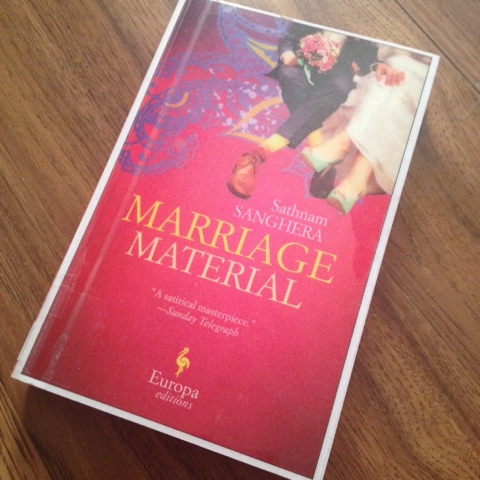
Book Review: Marriage Material


Do-Something-Everyday, May 9, 2016


Told with tenderness and occasional caustic humor, Sathnam Sanghera’s Marriage Material is a novel about three generations of a Sikh family settled in Wolverhampton, England. The familiar ingredients of this genre, struggle, filial duty, inter-generational conflict, cultural misunderstanding, language barrier, assimilation, to name a few,

Monday, April 18, 2016

Do-Something-Everyday: My Name is Lucy Barton


Yesterday evening I finished Elizabeth Strout's latest novel My Name is Lucy Barton. Strout is a Pulitzer prize winning author of Olive Kitteridge, as well as The Burgess Boys, Amy and Isabelle and several other acclaimed novels. Lucy Barton received excellent reviews from all leading newspapers and magazines but I found it somewhat less compelling.

It is a kind of meta novel in that it is a memoir of Lucy Barton written by Lucy Barton. Central to the story is Lucy's memories of her impoverished childhood growing up in rural Illinois in the 60s. The material and physical aspects of desperate poverty are precisely etched on her mind. Here is how she describes it:

"We were oddities, our family, even in that tiny rural town of Amgash, Illinois, where there were other homes that were run-down and lacking fresh paint or shutters or gardens, no beauty for the eyes to rest upon. These houses were grouped together in what was the town, but our house was not near them...we were told on the playground by other children "your family stinks" and they would run off pinching their noses with their fingers...I was often ravenous, and what I had for supper many nights was molasses on bread...Our home was down a very long dirt road. We did not have any neighbors nearby. And we did not have a television and we did not have newspapers or magazines or books in the house".
And what was the house like? For the first eleven years of her life, she, her two siblings and her parents lived in a garage that belonged to her great-uncle and in the garage there was "only a trickle of cold water from a makeshift sink". When the garage got too cold in winter, Lucy would stay late at school in the warm classroom doing her homework and reading books. She makes perfect grades and in her senior year gets full scholarship to attend a college outside Chicago. Leaving Amgash and her family behind, she makes her way from Chicago to  New York, gets married, has a family and becomes a writer.

But Amgash and the effects of poverty never quiet leave Lucy. They follow her in her ignorance of popular cultural knowledge, an absence of dress sense and, muddled hazy memories of mental illness, trauma and abuse she may or may not have witnessed.  In one poignant moment in the book, looking back on the early years, Lucy thinks may be it was not that bad. But "there are times, too--unexpected-- when walking down a sunny sidewalk, or watching the top of a tree bend in the wind, or seeing a November sky close down over the East river, I am suddenly filled with the knowledge of darkness so deep that a sound might escape from my mouth, and I will step into the nearest clothing store and talk with a stranger about the shape of sweaters newly arrived. This must be the way most of us maneuver through the world, half knowing, half not, visited by memories that can't possibly be true".

Exactly what was that dark knowledge Lucy never quiet tells us. She mentions the Thing, meaning an incident of her father 'becoming very anxious and not in control of himself'. Eventually, the readers with a couple of contrived narrative devises, come to understand that her father who fought in World War II suffers from PTSD and is prone to sexual exhibitionism.


I had two problems with the book. First, I did not find Lucy believable. I did not get a sense of what made her tick. Apart from the fact of her deprived childhood, her life moves forward without major bumps with strangers inexplicably smoothing her way. There is the high school guidance counselor who gets her admitted to college on full scholarship and even drives her there the first time. In college she has an affair with an art professor and at the age of twenty marries a well educated young man with a job in the city. While raising two daughters, she gets two stories published seemingly without much struggle. At the hospital, the doctor bills her for only five visits when he has been attending to her for months! Even as her marriage is falling apart, her husband pays her to attend a writing workshop where the teacher takes a personal interest in her work. As a writer, she becomes rich enough to pay for her own therapy and botox injections. The second time she gets married to a brilliant cellist. Really, what made her so effective? At one point, she calls herself ruthless, but exactly how so?

For a writer, she is completely uninterested in knowing how it was for her siblings to grow up in that household. Were their memories of their parents same as hers? Why was her brother, who at the age of thirty six still living with their parents, and sleep at night with the pigs that will be taken for slaughter next morning? As an author and as a sibling she fails totally.

The second problem I had with the novel was the ambiguous references to the father's mental illness and the nature of abuse. Without knowing what exactly that Lucy was struggling with, the elisions became a distraction and after a while you stop caring.

My name is Lucy Barton is a short novel that can be finished in one sitting. I wish it had been a richer book with the details filled out.

Thanks for visiting.


Wednesday, April 6, 2016

Do-Something-Everyday: Tales in Foreign Lands


Boule de Suif
 
Do-Something-Everyday, April 6, 2016


In an odd coincidence, the last two weeks I read three novels all set in foreign countries (relative to the U.S.). They also had few other things in common: one is an English translation of stories by a French novelist, another one is about an American translator of Portuguese novels by a Brazilian author and the third one is an English language novel set in a former French colony in the Caribbean. The three books are: The Necklace and Other Stories: Maupassant for Modern Times, translated by Sandra Smith; Ways to Disappear by Idra Novey and, Peacekeeping by Misha Berlinski. The last two are 21st century American novelists while Guy De Maupassant was a late nineteenth century French author. I will be posting a review of each starting with the best first.


I was first introduced to Maupassant via a South Indian movie adaptation of his famous novella Boule de Suif. Later after I had moved to the U.S., I read the English language version of it in a fat volume that included all of his 300+ short stories. That was a while ago. Recent events in Paris and in Western Europe have rekindled my youthful interest in European literature and when I saw the above-mentioned book on the recent arrivals section at my library, I was curious if these stories would hold my interest still. Most did. Even though the stories are set in 19th century France, many of them feel real and true almost 150 years later.

Maupassant’s stories are well known for their surprising plot twists and often leave you wondering “what if”. Take the Necklace (La Parure), for example, which ends with a surprise revelation that the diamond necklace that Madame Forestier loaned to Madame Loisel was really a fake. Now that both women know it was a genuine diamond necklace that Madame Loisel returned to Madame Forestier, would she ask for it back? Would Madame Forestier’s initial honesty extend to giving it back to the rightful owner? I wonder what that conversation would have been like. 

In the Question of Latin (Le Question du Latin), when a former Latin teacher, now a prosperous grocer, exclaims “Oh! Good Lord, Latin, Latin, Latin. A man can’t live on Latin alone!”, could Maupassant have imagined that 150 years later that question would be extended to English literature, Art History, Music, Anthropology and all other disciplines unconnected to commerce? 

Finally, his most famous Boule de Suif (Boule de Suif). It is a good story but surprisingly also a trite one. In making Boule de Suif, a generous, patriotic, sensitive prostitute misused by her hypocritical fellow passengers, the real hero of the story, Maupassant had succumbed to the male fantasy of a hooker with a heart of gold. In the one hundred fifty years since he wrote that story we have seen many versions of that trope (a trope that found its cinematic apotheosis in Julia Roberts’ Pretty Woman). In the post-feminist era, this is one story that does not hold up well.

To sum up. In the skilled translation of Sandra Smith, Maupassant’s stories get a fresh modern update. Give them a try. 

Next week: A review of Ways to Disappear by Idra Novey.

I have posted several photos of Santa Fe Folk Art Museum on this blog post. Click here to view them.

Thanks for visiting.